I don’t know how it was for you, but my feelings about climate change have undergone a notable shift over the last few years. My parents raised me and my siblings to hold strong social progressive Catholic environmentalist convictions (although most of the Catholic dogma didn’t really stick), so belief in the science of climate change was never a question—I mainlined recycling and bicycling and native plant restoration through the same vein as religion. But climate change was always something terrible that was happening to the world, not to me, personally.
Then I moved to California, and we had a fire season, and then another, where the dangerous air quality here in the bay area was suddenly global news. We started checking PurpleAir every day. We bought a pack of N95 masks (before the pandemic!). We all remember that day where the whole sky was orange. (Our pet chickens didn’t understand; they spent the whole day clustered near the coop, thinking it was dusk. We went on a midday walk and spotted a California quail out running along the path on top of Motorcycle Hill—the first and last time I’ve seen a quail up there. I imagine it was just as confused as our chickens.)
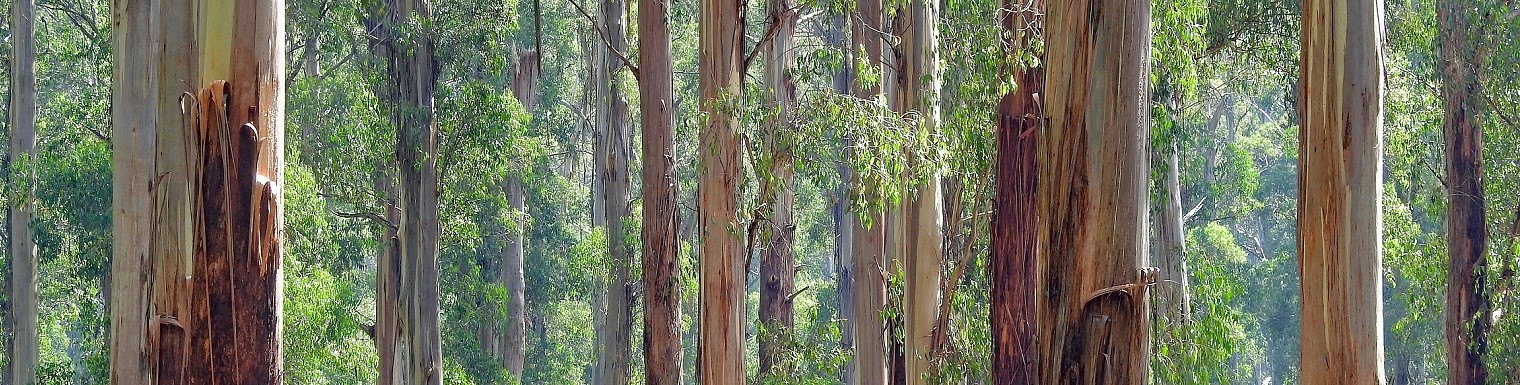
We started hearing more and more frequent news of enormous wildfires here in California, then elsewhere across the West, the Midwest and Canada, or in my home state of Washington. The 2018 Camp Fire, and then the Palisades Fire, illustrated how devastating fires appear to be getting more common here as our climate gets hotter and dryer. Huge fuel loads have built up over decades of fire suppression. When you move to California, you learn about longstanding issues with invasive flammable tree species such as the ubiquitous blue gum eucalyptus. Talking with longtime Bay Area residents, it gets even closer to home: I recently learned about the Oakland Firestorm of 1991, which really made the threat of urban fire here seem real.
Fire safety has become near and dear to my heart. At the same time, as a gardener, I struggle with the vision of homes with a wide clear zone all around them; I feel the urge to fill up my garden with native plants and shrubs, fruit trees, and vines to cover my fences. I want to make my yard a haven for insects that need deadwood or hollow stems to nest and overwinter in. I don’t live in a high hazard area of El Cerrito, but I understand that hazards don’t always stick to their allocated map areas. So I’m thinking a lot these days about how to balance my lush garden dreams with more sober risk mitigation strategies.
I want to talk about fire safety in El Cerrito—not just as a Californian but as a member of our particular, unique community, and with more of an eye to sharing resources and information rather than just offering my opinions. On this topic, I believe our community is at least generally supportive and aware, so far as I see expressed by the sentiments captured in the 2026 budget priorities survey:
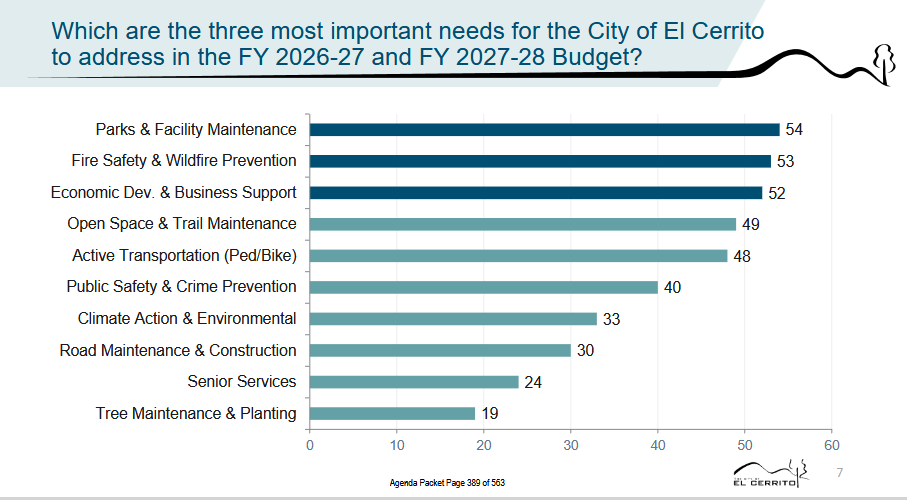
It seems like an issue of shared, stark risk and communal effort. California climate is only projected to get hotter, dryer, and more prone to droughts, storms, and wildfires in the coming decades. We might not all be aligned on the practical details, but it seems like many of us can agree that we must work together to address our community’s biggest natural safety hazards.
And this is very much a community effort, not just in terms of city budgeting priorities but also in coordinating direct actions. The Fire Department partners with residents on multiple fronts. We are in the pilot phase of a red flag parking project, in partnership with our nonprofit El Cerrito FireSafe Council, which restricts parking on one side of some of the city’s narrowest streets on days when fire risk is high. The purpose is to ensure that in the event of an emergency, these streets will be clear enough to let residents evacuate and simultaneously enable first responders to get through. The Fire Department also works with East Bay Regional Parks District on vegetation and fuel reduction efforts, holds community emergency response forums (Go Bag Bingo is coming up soon, on Oct 8, 2026), and teaches El Cerrito & Kensington Community Emergency Response Team (CERT) trainings. The Fire Department also coordinates with the El Cerrito Friends of Hillside (a group working on invasive plant removal and native habitat restoration) to inspect burn pile design and develop plans for fuel load removal and/or controlled burns. In a similar vein, El Cerrito FireSafe Council volunteers partner with the city as hands-on contributors to community fire abatement efforts, as demonstrated in their recent Aug 18, 2026 presentation to City Council on the outcome of a $15,000 grant awarded for the Rifle Range – Club View evacuation route fuel reduction and vegetation mitigation project.

Yet despite this breadth of community engagement, it turns out not all residents are on the same page. A neighbor I met recently made some comments that shocked me. She said that—in her understanding—we pay our firefighters too much, because they just “sit around” in the fire station, waiting for the occasional emergency. In her view, El Cerrito doesn’t face that much fire risk, and we are overstaffed for our city size. The conversation led me to the realization that not everybody in town feels the sense of urgency about fire safety as I do. This was a perspective I honestly had no concept could still persist after wildfire smoke events have become a normal summer experience here. Even well-meaning folks can struggle to come to terms with fuel reduction efforts—aka flammable tree removals—that feel like an assault on beloved, fragrant groves. Similarly, I’ve seen a number of folks complaining on Nextdoor about poor air quality caused by recent Angel Island controlled burns.
I can appreciate being frustrated by hazardous smoky conditions caused by unfavorable wind direction (exacerbated by apparent lack of nimbleness on the part of fire coordinators in response to high forecast temperatures and Spare the Air days), but I cannot quite grasp how some folks then conclude that controlled burns are just bad management, or that the decision to go ahead with a burn means that fire officials are simply indifferent to changing wind conditions. Do some of our neighbors really think that shipping hundreds of goats out to the island is a viable alternative?1
In contrast, some residents feel we are not doing nearly enough to prepare. In a recent conversation, former CA State Auditor and 10-year CERT member and area coordinator Marlene Keller highlighted an almost apocalyptic possibility: A “worst case scenario” wildfire could occur in the undeveloped land to the east that, under “Diablo” wind conditions, could turn our hillside eucalyptus groves into torches that blow embers for miles across the city2 and overwhelm our firefighting capabilities, similar to how the Palisades fire devastated parts of Los Angeles, destroying over six thousand structures. Based on her extensive CERT experience, Marlene feels that this risk is a real possibility that El Cerrito residents need to be aware of when thinking about investing in fire mitigation efforts and planning for disasters. I found Marlene’s warning is corroborated by various East Bay Regional Parks District Wildfire Resilience resources, which describe the process used to model fire risk areas, particularly noting “locations of Eucalyptus stands that represent significant threats from torching and crown fires that can cause ember flight.” There’s a whole science to understanding wildfire risk; reading some of the documentation behind EBRPD mitigation strategies is both a bit alarming (lots of references to things like “eight-foot flames” and “ember loft” and “torching potential”) but also, strangely, a little bit comforting—it’s good to know that we have experts applying their knowledge to a coordinated regional strategy. After the Palisades fire, El Cerrito Fire Chief Saylors visited Los Angeles to study what went wrong; last August, State Assemblymember Buffy Wicks hosted a Wildfire Preparedness Day in partnership with El Cerrito, encouraging a coordinated approach to fire safety between Cal Fire and Contra Costa and Alameda Counties. Here in El Cerrito, the city has received grants to remove some of the most hazardous stands of eucalyptus and replace them with more fire resilient native plantings.
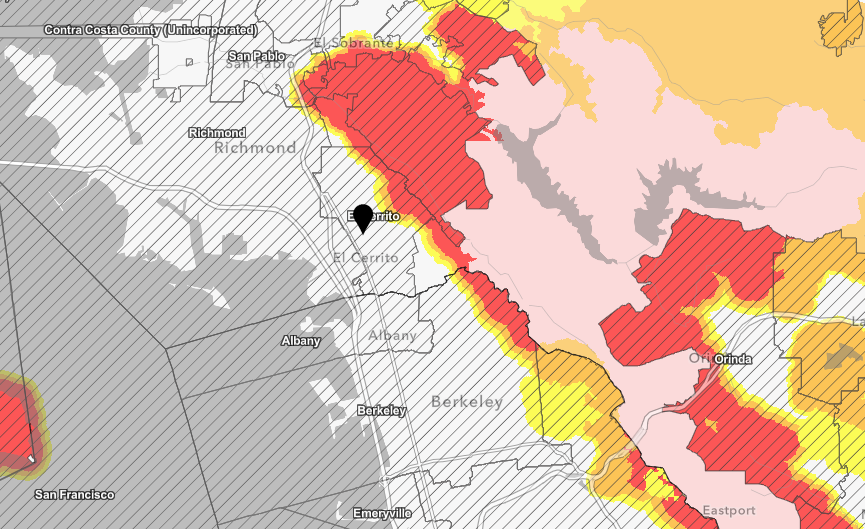
Even in a more moderate scenario, there are substantial areas of El Cerrito that are built in increased fire hazard zones, including Very High Fire Hazard Severity zone properties highest on the hillside. It makes sense for El Cerrito to have a substantive investment in fire safety, given our unique terrain, the lives and property at stake, and the way risk is a factor of our individual as well as collective decisions. We need to be aware of our city’s evacuation route limitations—Marlene talked about the risk of blockages on Arlington Ave, for example—and take steps to prepare for the worst, including ways to help the most vulnerable residents who may not be prepared to evacuate. She pointed me to several critical resources for residents to stay informed in case of emergencies: the Contra Costa Community Warning System and the Watch Duty app, which provide real-time updates and map data. The Fire Department also offers various resources for homeowners (and gardeners) to think about emergency preparedness strategies, which can be useful even for those of us who don’t live high in the hills.
As in my last post, I have been wondering how to make a realistic assessment of the “right size” of an investment in safety. The importance of fire prevention and disaster preparedness seems like a no-brainer to me, but after my skeptical neighbor raised her complaint about our fire staffing levels, I started to wonder. First of all, how does El Cerrito compare with other cities around us? I have to start with the assumption that not all of our neighboring cities face equal fire hazard burden. Just looking at a map, combined El Cerrito and Kensington appear to have a notably higher proportion of high hazard area than our neighbors of Richmond3 or Berkeley. Albany, by contrast, does not have any fire hazard area. So a simplistic city-size expense comparison seems wholly inadequate.
Going a step further, I reached out to the Fire Department directly, wondering what kinds of activities the department carries out day-to-day. My skeptical neighbor’s complaint contrasted her impression of the Fire Department with police operations where she subscribes to a routine report of all the things El Cerrito police have been doing. Fire Chief Saylors responded to me in great detail; I think it best to simply pass along what he shared:
“The Police Department and Fire Department operate very differently because they have different missions, staffing models, schedules, and operational requirements.
Police personnel generally work schedules based around a traditional workweek, while firefighters operate under the special FLSA work-period provisions applicable to fire protection personnel. Practically, our firefighters average approximately 56 hours per week, commonly working 48 hours one week and 72 hours the next. That means firefighters spend extended periods living at the station, typically two or three days at a time.
That’s one reason we call it a firehouse rather than simply a station. Our firefighters effectively live there while they’re on duty. They clean and maintain the station, shop for and prepare their own meals with their own money, train, exercise, complete inspections and pre-plans, and remain available to respond at a moment’s notice. They generally stay within the district because their primary responsibility is always to maintain the shortest possible response time to an emergency.
The nature of our calls is also different. Police handle a significantly larger number of individual incidents, but many can be managed by one or two officers. Fire Department incidents occur less frequently but generally require multiple resources simultaneously. Even a significant medical emergency can require several firefighters, while a working structure fire may require approximately 15–17 firefighters or more to perform command, fire attack, search, water supply, ventilation, rapid intervention, and other essential functions safely.
The time between emergency calls is also not simply downtime. Our firefighters have several responsibilities that fill their workday.
Training is our highest priority outside of emergency response. Firefighters must continually maintain state-required firefighting competencies and train on the unique hazards within our communities, including building construction, narrow streets, wildland-urban interface conditions, apparatus operations, and fireground tactics.
Our personnel also have significant continuing medical education requirements. Paramedics must maintain their licenses and complete ongoing education and skills training throughout their careers.
Crews conduct business fire inspections and pre-incident planning for commercial occupancies so that they understand buildings, hazards, access, water supply, and tactical considerations before an emergency occurs.
Physical fitness is another operational requirement. Firefighting involves working in protective clothing and breathing apparatus while carrying equipment, advancing hose, climbing stairs, forcing doors, conducting searches, and removing victims. Maintaining cardiovascular fitness and strength is therefore part of remaining operationally prepared for the job.
On top of that are the everyday responsibilities associated with maintaining the apparatus, equipment, station, and living environment.
So although firefighters may spend significant periods inside a fire station, they aren’t simply waiting for the next call. Their day is generally filled with emergency response, training, inspections, pre-planning, medical education, physical fitness, apparatus and equipment maintenance, station responsibilities, and preparing meals, all while remaining immediately available for the next emergency.
Ultimately, nearly everything they do during their shift supports one objective: being prepared and immediately available when someone calls 911.”
As if that wasn’t enough information, a few days later Battalion Chief Jose Castrejon also reached out to me with this accounting of a day in the life of the Fire Department:
“I appreciate your curiosity about what a day the fire department looks like. Our shift officially starts at 7:30 am, and most people arrive between 6:30 and 7:00am. The off-going personnel give an update to the oncoming shift on the previous shift emergencies, and activities. The early arrival is an important step to maintain our stations in-service 24/7, 365.
The crews begin their equipment checks and pause at 8:30am for a shift meeting. They return to the previous tasks and run the equipment to ensure operational readiness. Daily training activities and staff assignment start around 9:30 am and continue throughout the day depending on the activity. Since we are a small agency, we all have additional staff assignments such as fleet management, fire prevention, training instructors and so on.
Physical training is scheduled daily at 4:00pm. The evening is dedicated to normal housekeeping activities. Many of our firefighters enrolled in college or take other fire related courses during the evening. These activities are always superseded by 911 calls.
Responding to the community is our purpose and primary mission. We are an all-hazard department, meaning we respond to all emergencies. This includes supporting our law enforcement partners when needed. After incidents we must ensure all equipment that was used is replaced or placed back in-service. Once that is done, an incident report is written and if emergency medical services were provided, an additional patient care report is required.
Last year we responded to 3,331 incidents and are on track to respond to a similar amount by the end of the year.”
All of this really made it clear to me: I’m no kind of expert in fire safety and disaster preparedness, but I’m really glad to learn more about how we’re thinking about it seriously as a community already. I’ve focused a lot of my attention on the risk of wildfires as California adapts to climate change, but the Fire Department has a broader scope of responsibility, planning for all kinds of emergencies. At some point I hope to take CERT training in order to have a chance to build my knowledge and support the Fire Department in case of a disaster situation. Even without training, I can keep my garden cleaned up, remove hazardous vegetation, and I can give back to the community through volunteering; invasive species removal projects are something I participated in as a kid. As for the Fire Department budget, I have no idea if we’re making the right level of investment—this goes back to the question in my last post, about how much we as a community prioritize and value safety—but given the clear and present danger present in our nearby wild areas, I am grateful to see (most of) the community rally around supporting this work.
- Nothing against goats (and sheep!) as a fire mitigation strategy, to be clear! I love seeing goat herds deployed around our parks, helping keep brush and grass fuel levels under control. I think it’s generally a “yes, and” kind of situation.
↩︎ - According to the 2008 Wildfire Hazard Reduction and Resource Management Plan (Appendix C, Final Wildfire Hazard Assessment and Potential Treatment Areas), “When a fire burns through tree crowns, countless embers are produced and are distributed, sometimes at long distances… While eucalyptus—and to a lesser extent, pine trees—have been known to deposit burning embers miles away, the closer the structure is to any ember producer, the greater the risk of starting fires. Stands within 500 feet of structures were determined to be more hazardous than those further away…Position on the slope greatly influences how far embers can be cast; therefore, this aspect factors into prioritizing treatment areas.”
↩︎ - Including unincorporated East Richmond Heights just north of El Cerrito, as they contract for fire services with the city of Richmond.
↩︎