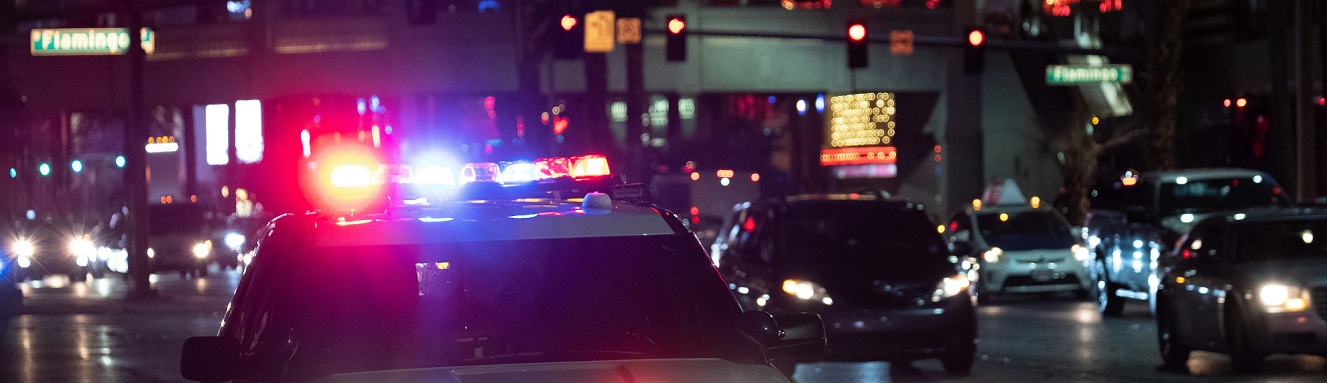
Asking my neighbors about what issues they care about here in El Cerrito, I have been a little bit surprised to hear a frequent theme: A decent number put “safety” at the top of their list. Safety is a big topic. It can mean many different things, not all of which are obvious. I think we often try to ignore our animal brains, but we’re the product of millions of years of evolution; we’ve fine-tuned the art of identifying threats, and unconscious fear motivates us more often than we care to admit.
The curious thing to me is, when I consider my fifteen years living in El Cerrito, I had never really flagged safety as a major concern. This is a quiet little town; maybe down around San Pablo there are more issues, particularly for businesses worried about robberies, but for me, secure in my home, considering my personal sense of risk, El Cerrito is about as safe a place as I’ve ever lived,1 at least in terms of interpersonal experiences.
Getting online to engage with my community politically, however, has changed that perception somewhat. I suppose I need to unpack that statement. See, I think as social creatures, we grapple with two big types of fears in regards to our interactions with other people: out-group fears—that someone “other” is out to get us—and in-group fears, that our own social group is going to reject us. And simultaneously, we’re all navigating our nebulous sense of collective identity in an urban social setting that’s too big for us to really grasp through direct interpersonal relationships, so we often try to construct tribal identities just to know where we stand in relationship to those two fears. I’m no psychologist; these are just my reflections on the world around me, but I’ve been pondering fear a lot recently because stepping outside of my comfortable bubble of anonymity has been a genuine challenge. Several times over the past few months I have found myself feeling actually unsafe—in my own home, in my neighborhood—due to experiences engaging with my community online. Just being visible, being perceived saying things that other people disagree with in public spaces—that’s very unsettling, especially when it trips those inbuilt fears of being socially ostracized, or triggers knee-jerk tribalism.
I don’t mean that I have felt directly physically threatened, although I have observed a couple neighbors engage in such anti-social behavior toward one another that it has started to raise concerns to that level. What I mean is, I have definitely felt psychologically unsafe.
We don’t talk about psychological safety in social discourse enough, I think. The internet age has given us the tools to engage with one another directly at an unprecedented scale, and our traditional social safeguards have not really been able to keep up. Social rules around civility, politeness, what you say to a stranger versus what you can say to your friends—these norms break down when we don’t meet one another face to face. Even in the real world, we have to put lots of structures in place—structures like the Brown Act—to create a bare minimum of psychological safety in public forums, so that democratic systems can function as intended.
And yet I believe that community is what makes us safe. The best antidote I’ve found, over and over, to the knot in my stomach that forms when I see “You have new replies to your comment,” is to get off social media and go about meeting my actual neighbors.
I’ve been out and about quite a bit, lately, canvassing (spoiler!) in support of MJ Jawili, who is running for city council on a message of building in-person community. I won’t talk in depth today about why I’m supporting MJ—that’s a topic for at least a whole post of its own, considering all the candidates in the race—but I’m appreciating the experience, and how well aligned it feels with my values. Canvassing is difficult. I find the moment of ringing a stranger’s doorbell to be excruciating: What if I’m interrupting their newborn baby’s nap? What if they’re having a terrible day, and my appearance is the final straw? I find it awkward and uncomfortable when someone comes up to my door trying to sell me on something, so why should I expect any different reception from my neighbors?
But in fact, for every invisible person who says “No thank you” from behind their screen door, there has been someone who says “Sure” when I ask if they would like to chat for a minute. And some of them have shared thoughts that surprised me and made me reconsider who we are as a community, what our shared values are.
Quite a few neighbors have shaken their heads wryly when I mention I’ve been on Nextdoor. I’m far from the only person who sees Nextdoor as psychologically fraught. Some have mentioned that they cannot handle the tenor of discussion there, or that they lurk but don’t dare share their own opinions. (Although the funny thing is, outside of the extremely loud and rancorous political discussions, I’ve found that Nextdoor participation actually has propelled me into real world action in a very meaningful way by drawing my attention to things the community is doing. I’ve connected with so many people, started attending so many actual events. I’m glad for the opportunities the site has provided me with, even though I sometimes find it feels notably unsafe to engage there with certain folks on certain topics.)
I think sometimes people tangle up physical and psychological safety. When someone says they want more police presence in our neighborhoods, I suspect at least a little bit of that feeling comes from a sense of general alienation from our neighbors. That’s not to say that there isn’t a real role for policing, or important discussions to be had about how we can make community spaces tangibly safer (see, for instance, the recent, impassioned debate about Flock cameras), but my own experiences this year have reminded me that my hindbrain doesn’t really know the difference. When we feel like we’re in social conflicts, it has the same effect, putting us into the same fight-or-flight mode as when we think we’re being stalked by a tiger.
Part of why I started writing this post comes from the desire to better understand what the community means by safety, and what our collective priorities are when it comes to investing in a safe community. I’m being too oblique, perhaps. I’m referring to things like roadway design and physical infrastructure, yes, but also—especially—to our public safety departments. Probing my neighbors a bit when they cite safety concerns, they typically refer to their experience with public safety issues, referencing crime, police presence or absence, or noting (in my neighborhood) proximity to Richmond and nearby transient populations. Some are then quick to note that they don’t wish to demonize people experiencing homelessness, but they can’t help feeling uneasy, especially out walking home from BART late at night, or feeling nervous for their small children.
I have complicated feelings about policing as an institution—as I imagine many of us do, in an era where stories of police abuses are common in the news, and where ICE and federal law enforcement agencies are increasingly violent and ironically lawless. I’ve alluded in prior posts to the fact that a majority of our city budget is dedicated to our two public safety departments, police and fire. (My next post will be a dive into fire safety, in fact.) I frequently encounter great reviews of our police department, statements that we have good oversight and strong policies in place to safeguard against abuse, but of course I don’t have an insider’s perspective to check those statements. What I do know is that police as an institution have various forms of power, and any system that hands out power must also be held to high standards of accountability. I’d love to be in a place as a community where we can have conversations—psychologically safe conversations—about transparency and community oversight of our public safety systems.
When some of my neighbors complain that we are spending too much on staff salaries, I wonder: Are we really saying we need to have a conversation about how much we are willing to invest in public safety? Because that’s part of the implicit message.
I don’t have any answers here. Policing is such a sensitive topic for a lot of people—including our police officers themselves, of course. I don’t feel like there are necessarily right or wrong answers, but it seems like we are struggling to have these conversations in an open and direct way, at the moment. Talking to City Manager Karen Pinkos at the Coffee and Conversations event a couple weeks ago, she recounted that a few years back, following the George Floyd protests, it became more difficult to recruit high-quality police officers—that there is a lot of demand nowadays for applicants with clean track records and higher levels of education. When I asked about civilian oversight, she pointed out that she oversees the department (as a civilian), and she sees all personnel concerns directly. Trust me, she’s saying. Knowing how low-trust the political environment is in our city right now, I wonder if that’s good enough.
Ultimately, I think the buck stops here: not with Karen, but with we the people, first and foremost. We keep us safe. We set the tone, we hold the line—of civility, of mutual respect, of community standards for acceptable behavior. And that means figuring out how to have these difficult conversations in a way that is respectful and productive.
Another neighbor recently pushed me to talk more overtly about how staffing and salaries are the major drivers of El Cerrito’s budget imbalances. I’ve been a little hesitant to do so, knowing that the conversation points directly towards our public safety officers. I’ve been unsure whether I have the skill to wade into that topic without inflaming existing tribal sentiments. Pointing out that the bulk of our pension liability imbalance comes from paying police and fire2 feels a lot like pointing fingers. Asking whether we have the right size and structure of police department sounds an awful lot like I’m gunning for someone’s job. Applying generalized equivalence between the corruption and “old boys club” national institution of policing and our specific department creates an immediate tribal mentality as well: You’re either for the police, or you’re against them. Psychological safety is hard to find in this particular conversation, for anyone.
And yet.
I’ve been repeatedly impressed by our city administration’s ability to address these topics in a thoughtful, impartial way. Karen spoke of her personal experience with family members in the police, and how that impressed upon her at an early age the importance of having high ethical and performance standards for police. She can point to the abundance of policy and training documentation on the El Cerrito Police Department website. I don’t believe that Karen, or Chief Keith, or anyone in a leadership position responsible for managing our police department, can be capable of true impartiality, but they seem to make a consistent effort at it. The department has stated its commitment to “progressive” policing. Unlike some other cities I have observed, I feel like there is a chance that in El Cerrito, we actually could have these discussions in an effective way, with good faith participation from the city.
I want to pause here, and say directly: I don’t know if we really need to make changes. I’m waiting to see what the forthcoming Service Delivery Study shows, but even with that information, I want to consider any question of right-sizing public safety from a few different lenses: 1) Are we getting bang for our buck, i.e. is our Police Department a good value in terms of the problems they solve, in terms of quantifiable work per dollar spent? 2) Are there things that the Police Department does today that could be better handled by other social services? 3) Do we as a community value and prioritize those services as much as or more than other things we could be doing with those dollars?
I have a few observations in answer to these questions—again, not enough to make any judgment calls, just some food for thought on my questions above.
- At Coffee and Conversations, Karen told us that a few years back the Police Department was spending a lot on overtime because it was very hard to fill vacant positions. Implicit in that assertion: The amount of work is a constant, not something the department can control. You can acknowledge that the number of calls to 911 and the nature of emergency situations is certainly a big uncontrollable factor, but what about activities like patrolling, issuing traffic citations and parking tickets, or administrative activities? (And on certain activities like issuing tickets, how should we talk about the revenue-generating side of policing? How much should we prioritize activities like parking or traffic law enforcement, and align on what the public value actually is?)
- A few years ago when the radical slogan “defund the police” was popularized, proponents would often try to articulate that it meant finding alternative, non-police ways to address public safety concerns. The idea of supporting alternate, unarmed social safety services resonates with me: I was so glad to learn about El Cerrito’s participation in CORE services (PDF) for our unhoused population, and our additional revenue streams being used to provide housing support to help prevent evictions. I definitely want to have more conversations about how to bolster these kinds of programs. The other day, I was looking at the El Cerrito PD website and observed that we have a Crisis Negotiation Team tasked with “the safe surrender of subjects in crisis situations. Such situations could include negotiating with armed subjects, barricaded subjects, mentally ill and suicidal subjects.” To me, those are extremely different scenarios, and I have to wonder if it’s best to bucket them all together within police responsibilities.
- Some folks will always tend to prioritize public safety over other uses of funds. “Safety first” is a motto for a reason. But I would argue that it is, in fact, quite possible for us to be too safe: we should always try to evaluate what we sacrifice for safety. When people retreat into gated communities, they lose a certain kind of personal freedom. When we opt into mass surveillance systems, we all lose privacy. Every dollar we spend on public safety represents an opportunity cost for something else we could be doing (and vice versa, of course).
This has been a tough post to write, because I don’t have answers. What I do know is that we tend to dance around this conversation because it is difficult, and the lack of psychological safety in a lot of our public discourse means we often entrench ourselves in simplistic stances according to whatever camp we feel part of. And that’s a shame, because in my view, we’re all in this together. Let’s try to figure out how we can commit to working together to increase safety and connection as a community.
- The disclaimer here, of course, is that I’ve been lucky to live most of my life in pretty safe places, so El Cerrito is pretty typical for my lived experience. I grew up in a pretty nice neighborhood in Seattle; I lived in Bellingham, WA, and then Madison, WI for a bit before landing for the long term in the Bay Area. Before moving to El Cerrito, I lived for a short while in the Ashby area, which was a little rougher around the edges, but I’ve never really lived somewhere I felt was truly high risk. So that certainly shapes my outlook.
↩︎ - This is something I decided not to dive into in my very long pensions post: There’s a very big difference in the generosity of retirement contributions provided to “Safety” plans (police and fire) compared to “Miscellaneous” plans (everyone else), both in the Classic and PEPRA tiers. I don’t know the full rationale—or legal mandate—behind such imbalance, but it does suggest analysis of how we structure benefits for these specific departments is central to any discussion of the real cost of these services. Interestingly, Governor Newsom just vetoed a bill that would have made police and fire pensions even more generous. It’s a rare day when I have to say I agree with the Governor.
↩︎